Using drone workshops to open doors for the students we usually overlook
Let’s be honest about how STEM selection usually works. An opportunity comes up — a robotics competition, a science camp, a work experience week — and nominations go out. Teachers reach out to certain students. Almost without fail, the same handful of kids end up with their hands raised.
They’re the top students. The ones already in the enrichment program. The ones whose parents email the school. And they’re great kids with exciting futures ahead. But we need to talk about everyone else.
Have we confused grades with potential?
Grades provide a structured picture of how a student is progressing — but they measure a narrow set of skills. They reward consistency, compliance, and the ability to meet expectations set by someone else. All useful things. But they don’t tell us much about curiosity, resilience, or the kind of stubborn persistence that drives real scientific breakthroughs.
Some of your future analysts, engineers, and innovators are sitting right in your classroom. You might think they’re disengaged. More likely, they’re just not being engaged in the right way.
"The students who aren't topping the grade book aren't lacking potential. They're often just waiting for the right door to open."
What we learned from a decade of drone workshops
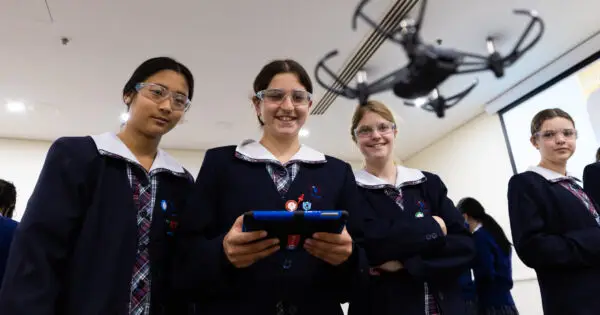
She Maps marks our 10th year running drone workshops for students and teachers. In our latest program, run in partnership with BHP, we asked teachers to do something different: don’t limit your selections to high-achieving students. Look outside the academic box — especially at students who may not see themselves in STEM yet.
It came with real challenges. The students who believed they should be there — already top of the class, already in every STEM program — had to be turned away. Some teachers found themselves acting as bouncers at the door. Meanwhile, the students who were invited were second-guessing themselves: Why am I here? I’m not a STEM person.
Teachers had to hold the line in both directions — and actively encourage the invited students to simply give it a try.
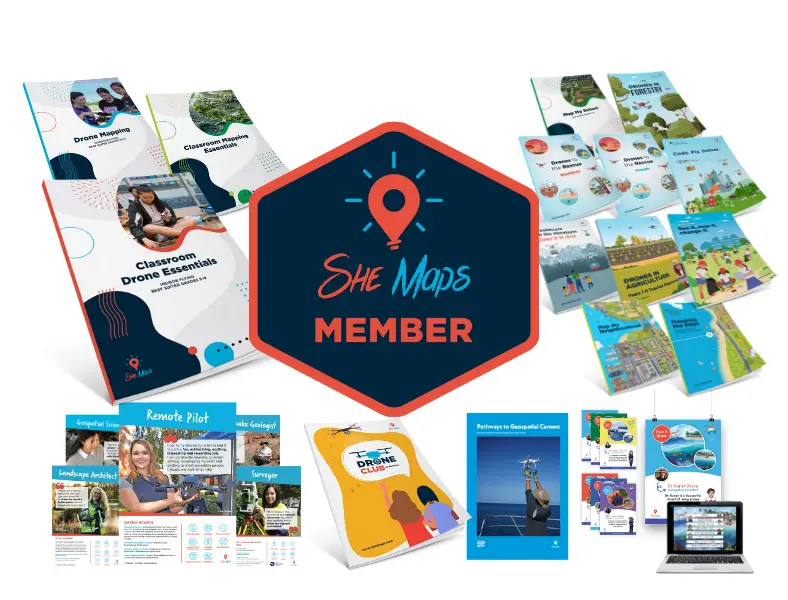
Find out how to become a She Maps member
The skills that don’t show up on a report
The qualities we were looking for — persistence, creative thinking, the courage to ask a question when you’re not sure it’s the “right” one — don’t appear on a school report. They show up in conversations, in the way a student approaches a problem, and in the questions they ask when they think nobody’s listening.
It’s also worth naming something uncomfortable: students with support at home — tutors, stable environments, parents with time to advocate for them — are more likely to be the ones who stand out academically. The student managing a more chaotic life, who still shows up every day, may have every skill STEM demands — and none of the grades to prove it.
Tying STEM access to academic performance is, in effect, tying it to socioeconomic background. That’s a problem for equity. It’s also a problem for finding good talent.
A major systematic review published this year — Improving Career and Vocational Outcomes in Students (Clement, 2026) — analysed 31 studies from nearly 6,000 research records. When students aged 12 to 25 were given access to career interventions like hands-on training and work-based learning, the results were consistently positive: improved career readiness, stronger academic outcomes, greater resilience. The key ingredient wasn’t academic achievement. It was opportunity.
What one chance can do
There will always be more opportunities for the student who already gets the invitations. For the student who gets one shot — one program, one camp, one traineeship — it might be their only chance.
When a student who isn’t a typical academic is included in an opportunity like this, something shifts. They ask themselves, do I belong here? And the act of being chosen answers it clearly: we think you do. That shift can redirect an entire life.
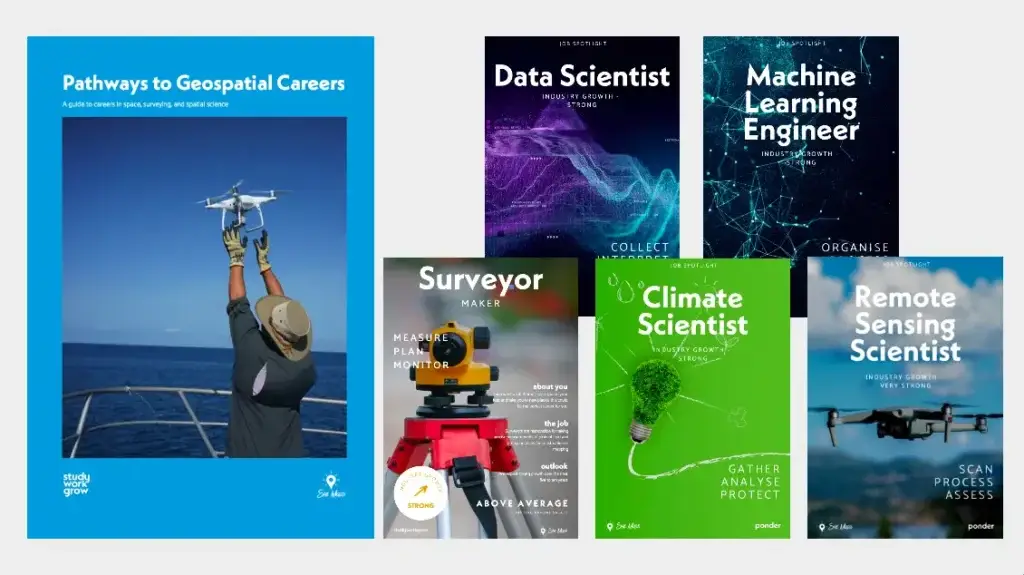
Find out more about the different careers involved in geospatial science.
About She Maps.
She Maps is Australia’s leading expert in drone and geospatial education.
She Maps assist schools with the purchasing of drones, school-industry created drone and geospatial teaching resources and highly supportive teacher professional development.
FREE eBook – How to start a drone program at your school – Teachers Guide – Download Now
Learning Solutions Guide – Programs, Products and Pricing Guide – Read now
Ready to buy drones for your school? Browse our convenient classroom kits!
You’re in Safe Hands!
She Maps is a CASA approved commercial operator to fly microdrones indoors with students and teachers. CASA holds commercial operators, to a higher standard than recreational users and educators. This means that She Maps has been assessed by CASA as having rigorous training and risk mitigation procedures in place.
Want some help?
Schedule a call with one of our team members to get some personalised recommendations.
Take our resources for a spin and join the thousands of teachers who love our ready-to-teach classroom materials. Try one of our complete units of work for free.