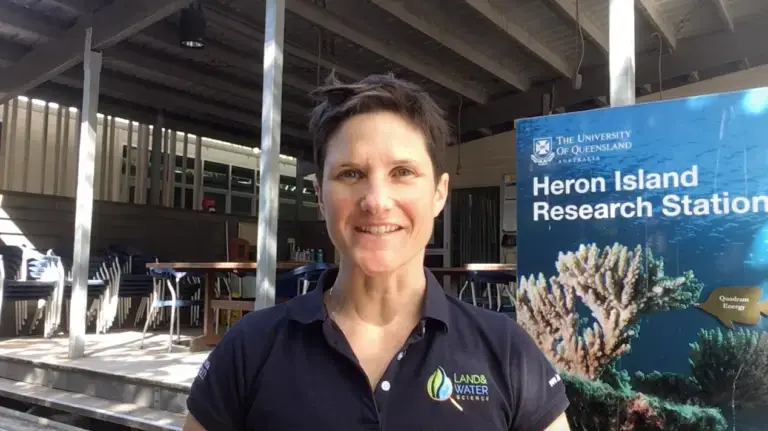
This article is written by She Maps Education Director, Dr Karen Joyce. For more about Karen’s work, follow her on Twitter.
I am fortunate to have a very privileged education background. I attended good Catholic schools with excellent teachers, then I backed that up with many years at university to finish with a PhD. In my privileged bubble, from childhood even through to early adulthood, I was unaware that not every child has the opportunity to go to school.
Today, there are more than 120 million girls out of school. Honestly, I used to think that the kids out of school were the naughty ones.
For all my education, I was shamefully uneducated.
Sometimes, some problems seem so big that they are insurmountable. Certainly ensuring that all children receive an education is a basic human right. But we are far off the mark, particularly where girls are concerned.
Starting with IMBY (as opposed to NIMBY – Not In My Backyard)
Rather than succumb to what feels like an overwhelming challenge to tackle, I’ve decided to ‘think global, act local.’
Educating girls is a global issue (check out the United Nations Sustainable Development Goals).
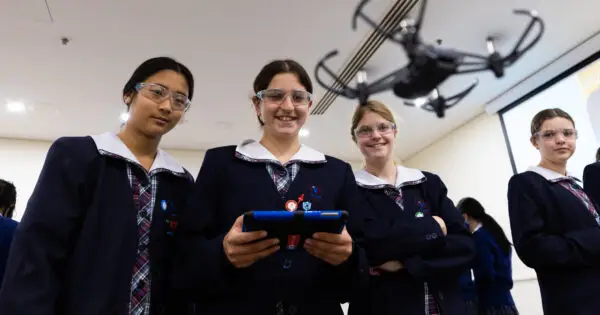
Educating girls in STEM is my local contribution.
In doing that, I’m contributing to changing the face of the STEM workforce. In Australia, only 27% of the STEM workforce is female. A dismal statistic in 2019 given that our government started focussing on educating for this set of skills back in the ‘90s.
Why is my privileged upbringing still considered a ‘privilege’?
In my bubble, my family helped me believe that I could do anything I set my mind to. Some might say I was lucky. But this suggests I obtained something above and beyond what should be considered a basic right.
Yet I am aware that many girls don’t receive the same level of encouragement or unfettered belief in their capabilities. Unconscious bias and gender stereotyping leads many to believe that girls and women are less competent in certain tasks (and careers) than boys and men, purely because of their gender.
There is no evidence to suggest this is true. Some people are better at some tasks than others. But this is not gender-driven.
Breaking down gender bias
Bias and stereotypes reinforce homogeneity, which then reinforces the bias and stereotypes.
The gender bias that boys have a more natural aptitude for STEM-related skills means that boys end up doing STEM-related skills. From Meccano trucks, to taking science subjects at school, to a degree in engineering – at a glance, it can feel like boys naturally end up here. That’s the reinforcement of gender bias kicking in.
Ultimately, this leads to a lack of diversity in our STEM workforce.
Innovation doesn’t come from like working with like. Innovation sparks when we challenge ourselves with diverse thought from diverse people. Heterogeneity as opposed to homogeneity, if we’re going to get scientific.
If we want an innovative STEM workforce of the future, that can solve some of the substantial environmental challenges ahead, then we must promote diversity. As global leadership expert, Jim Collins, would say, we can tackle this Big, Hairy Audacious Goal by getting involved and becoming exhilarated by the journey.
I say we do this by thinking global and acting local. By leveraging the individual skills we already have and contributing our enthusiasm. In doing that, we reach people who need that encouragement to pick up the Meccano truck or do the degree in engineering.
That’s how the face of Australia’s STEM workforce will change.